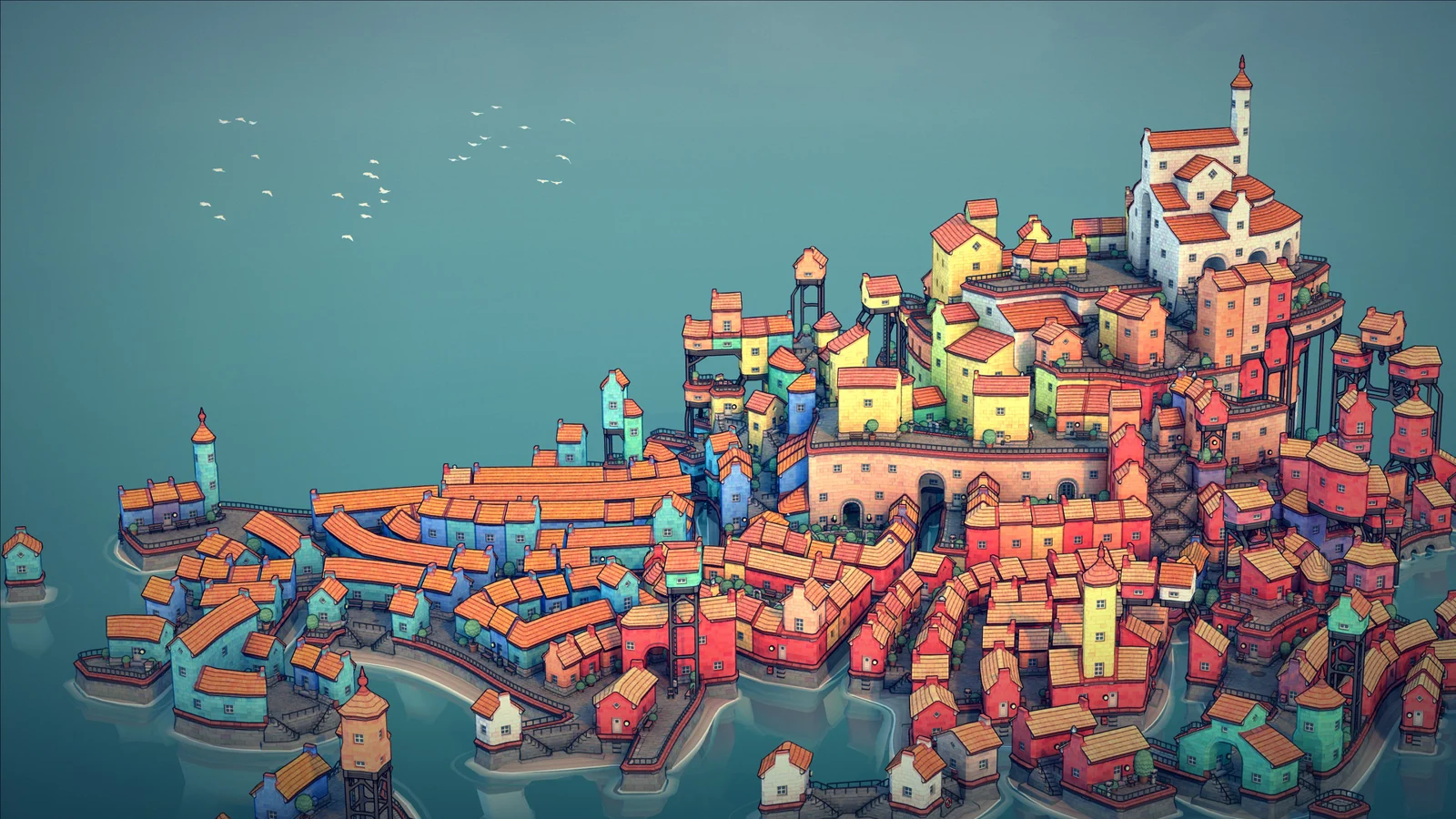
Draw the empty shape first
Begin an original Townscaper concept with the shape of the water you want to preserve. A shallow crescent of buildings can suggest a sheltered harbour; two separated groups can suggest an entrance. The game does not simulate a working fishing economy or harbour operations. The proposal is architectural and visual. Thinking about the open area first prevents the familiar pattern of adding blocks until every inlet disappears and the settlement becomes a solid platform with water only around its outer boundary.
Build two arms without closing them
Extend two modest groups from a shared inland area or build them as separate islands. Keep a visible opening between their ends. The spacing can be described in cells on the selected part of the grid, but the irregular grid means there is no universal metre-based plan to copy. Start small enough that you can see the whole composition. If the opening becomes narrower than the visual mass around it, remove a few blocks before adding more height. A harbour mouth should be recognisable at the scale from which you intend to view the town.
Use height to mark the entrance
One slightly taller building near an entrance can make the open water feel intentional. It need not be the tallest tower in the entire project. Keep the opposite arm lower so the pair does not become a symmetrical gate unless that is the look you want. Let a few lower roofs lead the eye towards the opening. This is a composition exercise, not a way to unlock a special harbour object. The underlying algorithm responds to the blocks, while the role of those forms comes from your arrangement.
Check the water from more than one side
Rotate the view and inspect whether the inlet still reads as an inlet when the near buildings obscure part of it. A composition that works only from directly above may need a wider opening or a lower foreground. Preserve at least one clear sightline towards the inner water. That decision gives later courtyards, bridges and towers a context. They belong to a small maritime place because the water has a shape and a route through the image, not simply because the houses happen to stand at sea.