Give each image a different job
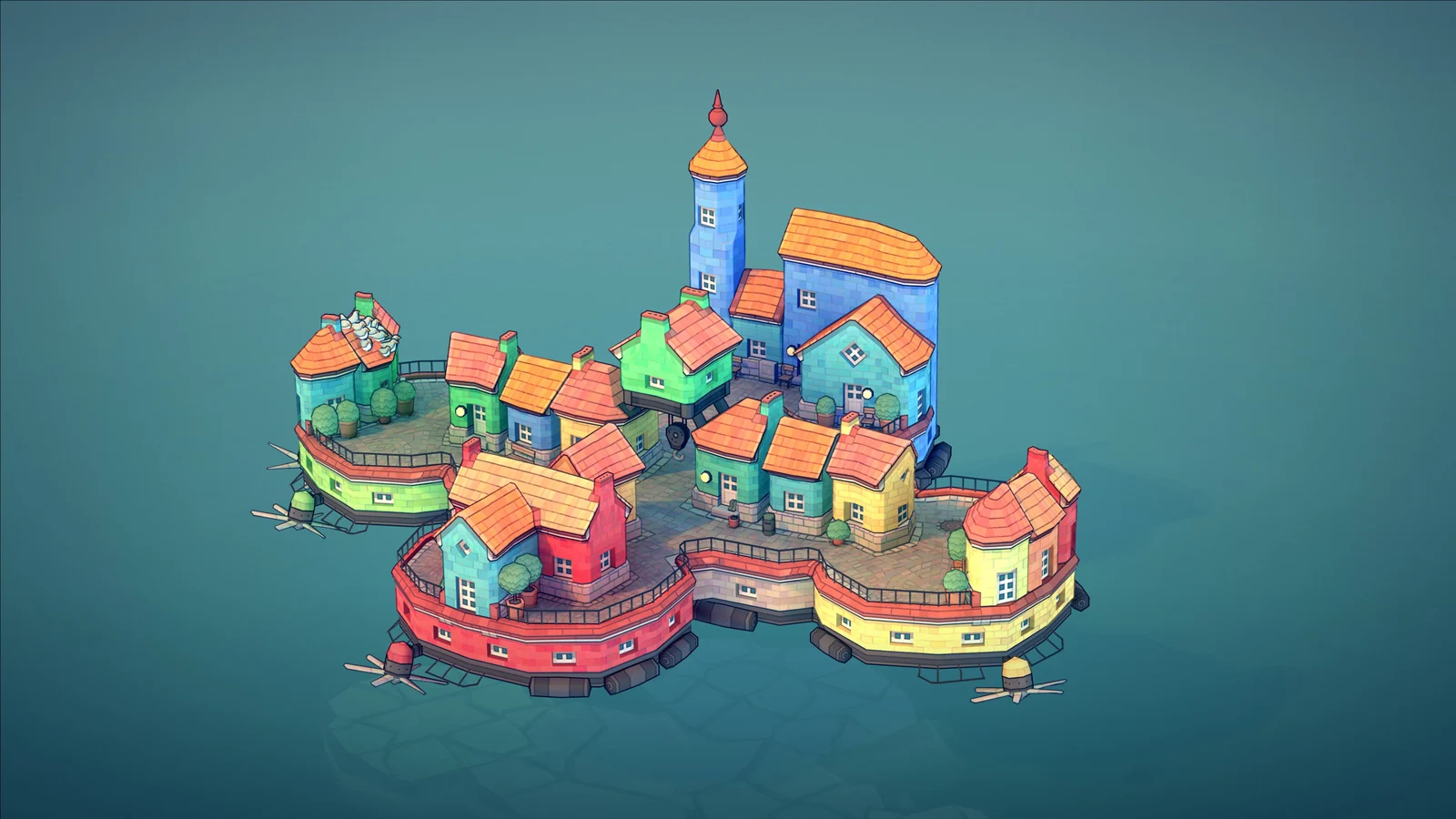
An original Townscaper gallery can contain three kinds of view: the whole settlement, the waterfront relationship and a close architectural corner. These should explain different parts of the build rather than crop one image into several substitutes. If you have not constructed the town yourself, use diagrams labelled as design concepts or credit official screenshots as official. Do not describe a developer image as an original personal project. The distinction matters especially when the site's subject is creative building.
Begin with the broad composition
The opening view should show the shape of the town against the water. Choose an angle where the main landmark, the harbour opening and the lower roof groups can be recognised together. Leave enough empty water or sky for the silhouette to read. This is a framing decision rather than a game achievement. A very close camera can show charming details but fail to explain how the settlement is organised. Save that close attention for a later image with a more specific purpose.
Move to the edge and then inside
For the second view, concentrate on the relationship between buildings and open water: an inlet, an arch-like connection or a stepped row at the edge. For the third, choose a courtyard or a smaller cluster whose forms were not clear in the wide image. Rotate and reframe rather than merely using a tighter crop of the first capture. The sequence should reward the reader with new information. Repeated colours can connect the views even when their scales and subjects are quite different.
Write captions that describe design choices
A useful caption can explain that the taller orange form marks the entrance or that a lower foreground preserves a view into the courtyard. It should not repeat a generic statement that the game is relaxing. If the images illustrate a proposed build, say so at the start of the gallery and keep the captions about the plan. The finished presentation becomes a guide to seeing and arranging a coastal town, with each image contributing something that the previous one did not already show.